Top 10 Branding Trends for 2026: Decrypting the Future of Engagement
Nov 27, 2025 — Branding
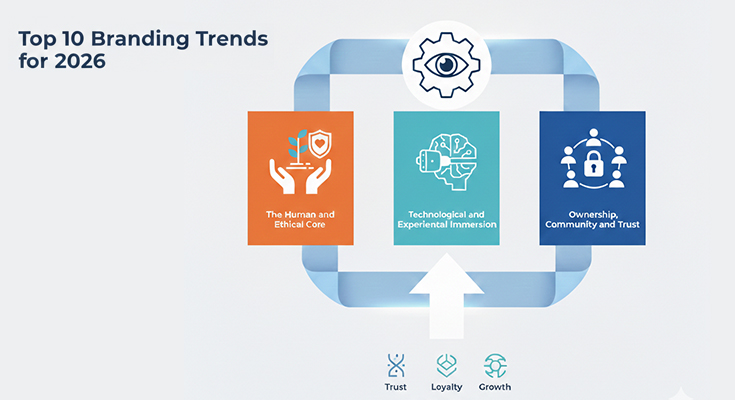
The branding landscape of 2026 demands a radical shift from static identity to dynamic, purpose-driven ecosystems. Success will be defined by the ability to cultivate genuine human connections, demonstrate ethical leadership, and leverage technology to create highly personalized, immersive experiences.
For businesses working with a professional branding company or advertising and branding agency, a brand is no longer just a visual asset. It has become a strategic engine that drives trust, loyalty, and long-term growth. Modern branding services now extend far beyond logos and visuals, influencing every customer touchpoint.
Here are the top 10 branding trends shaping the next era of business.
I. The Human and Ethical Core
These trends focus on authenticity, purpose, and the ethical responsibility brands hold in the modern world.
1. Radical Transparency and Ethical Accountability
Consumers in 2026 want to understand not only what a brand sells, but how it operates and what it stands for. Greenwashing and surface-level messaging are quickly rejected.
Brands must demonstrate transparency across supply chains, labor practices, and sustainability efforts. Ethical accountability and genuine commitment to values such as diversity and inclusion must be embedded within brand strategy and brand development, not treated as standalone campaigns.
This shift makes transparency a core pillar of effective corporate branding.
2. Brand for Good and Purpose-Driven Leadership
Brands are expected to move beyond profit-driven narratives and contribute meaningfully to society. Purpose-led branding aligns business goals with social and environmental impact.
For organizations investing in long-term brand positioning, purpose becomes a strategic differentiator. Corporate responsibility is no longer optional. It defines brand credibility and customer loyalty.
3. Human-Centric Branding and Clear Communication
Human-to-human branding continues to shape both B2B and B2C markets. Complex jargon and feature-heavy communication no longer resonate.
Modern branding services emphasize clarity, storytelling, and outcome-driven messaging. Brands that communicate with simplicity and empathy build stronger emotional connections and trust.
II. Technological and Experiential Immersion
These trends leverage technology to deliver deeper and more immersive brand experiences.
4. Hyper-Personalization at Scale
Personalization has evolved beyond basic segmentation. Brands now aim to deliver tailored experiences based on real-time behavior.
This trend directly influences brand experience and brand identity design, ensuring messaging, visuals, and interactions feel relevant and contextual while maintaining consistency.
5. Immersive Brand Experiences Across Digital Spaces
Branding is expanding into interactive environments such as augmented reality, virtual experiences, and gamified platforms.
Businesses using advanced branding and advertising strategies can create memorable interactions that extend brand identity beyond traditional channels.
6. AI-Powered Creativity and Adaptive Visual Identity
Artificial intelligence is becoming a creative partner in branding. Visual assets such as logos, layouts, and marketing collateral are increasingly adaptive.
AI-driven tools support scalable brand identity systems that remain consistent while adjusting across platforms, formats, and audiences. This allows brands to stay relevant without compromising core identity.
III. Ownership, Community, and Trust
These trends define how authority, loyalty, and trust are built in modern branding.
7. Sonic Branding and Audio Identity
As audio-based platforms grow, sound becomes a critical branding element. Sonic branding complements visual identity and strengthens recognition.
This approach supports cohesive corporate branding strategies across digital and physical touchpoints.
8. Data Ownership and Trust-Centered Branding
Consumers expect transparency and control over their data. Brands that empower users with clear data practices strengthen long-term trust.
Responsible data usage is becoming an essential component of modern branding and brand positioning.
9. Community-Owned and Participatory Brands
Brands are increasingly involving their communities in decision-making processes, fostering deeper loyalty and shared ownership.
Community-driven branding strengthens advocacy and reinforces emotional investment, supporting sustainable brand development.
10. Brand as a Service
Brands are expected to deliver continuous value beyond products or services. Educational resources, tools, and communities position brands as long-term partners.
This approach transforms branding into an ongoing service experience, aligning with strategic branding services and brand strategy.
Conclusion: Branding as a Strategic Growth Engine
Branding in 2026 is no longer static or superficial. It is strategic, ethical, and experience-driven. Businesses that invest in structured branding services, strong brand identity design, and clear brand positioning are better prepared to build trust, loyalty, and sustainable growth.
As brands evolve into ecosystems rather than standalone identities, partnering with an experienced branding company or advertising and branding agency becomes a key driver of long-term relevance and engagement.