The Ultimate Guide to Building an Effective Digital Marketing Strategy in 2026
Dec 11, 2025 — Digital Marketing, SEO
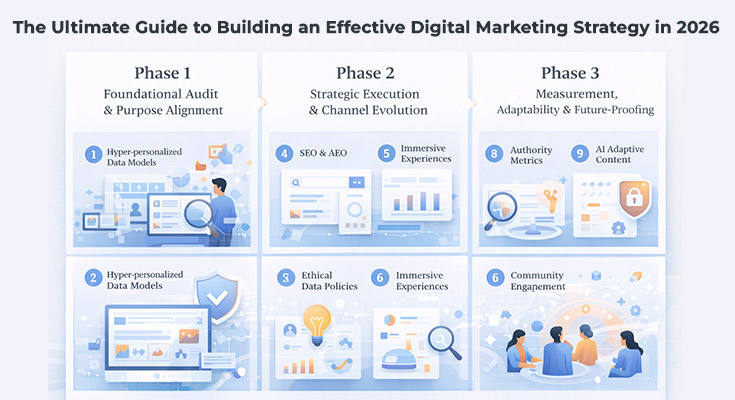
The digital marketing landscape is in constant flux, but by 2026, the pace of change will accelerate dramatically due to advancements in AI, evolving data privacy expectations, and the rise of immersive online experiences. A strategy rooted in outdated tactics such as broad advertising or keyword stuffing is no longer sustainable.
Digital marketing in 2026 is not about maximizing reach alone. It is about building relevance, authority, and trust. For businesses working with a professional digital marketing company, success depends on creating adaptive, ethical, and performance-driven digital ecosystems.
This guide outlines how businesses can build a future-ready digital marketing strategy that drives measurable growth and long-term customer relationships.
Phase 1: Foundational Audit and Purpose Alignment
Before execution, businesses must evaluate their current digital presence and align it with long-term objectives.
1. Redefining the Customer Profile Through Hyper-Personalization
In 2026, generic buyer personas are insufficient. Advanced digital marketing services rely on hyper-personalized data models.
Action:
Leverage AI, CRM platforms, and behavioral data to define micro-segments. Understand not only who users are, but why they search, how they consume content, and what problems they want solved.
Outcome:
Marketing efforts become proactive, delivering relevant messages before the user explicitly expresses intent.
2. Aligning Digital Goals With Ethics and Transparency
Authenticity is no longer optional. Ethical responsibility plays a critical role in modern digital marketing strategy.
Action:
Clearly communicate policies around data privacy, transparency, and responsible advertising. Ensure compliance across all digital touchpoints, from data collection to campaign execution.
Outcome:
Brands build trust, reduce reputational risk, and attract ethically conscious consumers.
3. Authority Audit: Content as a Strategic Asset
Content must evolve beyond promotion. It should establish authority and ongoing value.
Action:
Audit existing content and refocus efforts on utility-driven resources such as guides, tools, and educational assets that position the brand as an industry authority. This is a core pillar of advanced digital marketing services.
Outcome:
Stronger brand authority, higher engagement, and improved long-term search visibility.
Phase 2: Strategic Execution and Channel Evolution
Execution must reflect modern technology and changing user behavior.
4. SEO and AEO: Optimizing for Answers and Authority
Search is no longer limited to traditional results. SEO services must expand to include Answer Engine Optimization (AEO).
Action:
Implement structured content, schema markup, and conversational query optimization. Focus on intent-based search queries and direct answers.
Outcome:
Improved visibility in featured snippets, voice search results, and AI-driven search experiences.
5. Immersive and Phygital Digital Experiences
Websites now function as digital experience hubs.
Action:
Integrate immersive assets such as interactive content, AR experiences, and guided digital journeys. Businesses working with a full-service digital marketing agency increasingly treat websites as engagement platforms rather than static pages.
Outcome:
Higher engagement, stronger recall, and deeper brand interaction.
6. Building a Sonic Brand Identity
Audio-based platforms continue to grow.
Action:
Develop a consistent sonic identity across videos, podcasts, website interactions, and voice-enabled platforms.
Outcome:
Stronger emotional connection and instant brand recognition beyond visual touchpoints.
7. Community-Driven Social Media Marketing
Social media is shifting from broadcasting to community ownership.
Action:
Focus on engagement depth rather than follower count. Build niche communities and collaborate with micro-influencers for authentic storytelling. This approach strengthens performance-led digital marketing in Pune and across India.
Outcome:
More loyal audiences and sustainable advocacy-driven growth.
Phase 3: Measurement, Adaptability, and Future-Proofing
8. Measuring Trust and Authority Over Vanity Metrics
Likes and impressions are no longer sufficient indicators of success.
Action:
Track authority signals, engagement quality, repeat interactions, and trust-based metrics.
Outcome:
Clear measurement of long-term brand value and customer lifetime value.
9. AI-Powered Adaptive Content Systems
Manual content management will not scale.
Action:
Adopt AI-powered systems that dynamically adjust content formats, visuals, and messaging based on user context.
Outcome:
Consistent branding and relevance across platforms with minimal manual effort.
10. Data Governance and Interoperability
Respect for data ownership is essential for sustainable digital marketing services.
Action:
Implement transparent data governance frameworks and provide users control over their data.
Outcome:
Stronger trust, regulatory compliance, and long-term digital resilience.
Conclusion: Building a Future-Ready Digital Marketing Strategy
An effective digital marketing strategy in 2026 requires more than tactical execution. It demands ethical leadership, data-driven personalization, authority-building content, and immersive digital experiences.
Businesses that partner with a trusted digital marketing company and invest in structured digital marketing services, including SEO and strategic content, are better positioned to earn trust, visibility, and long-term growth in an increasingly competitive digital landscape.
At Kaizen 360 Branding Pvt. Ltd., we help businesses create impactful digital strategies through branding, SEO, ASO, PPC, web design and development, graphic design, logo design, social media marketing, content writing and marketing, and corporate videos.
Want to build a purpose driven brand that stands out in any situation? Let us help you create a strategy that delivers real value and long term growth.