Sustainable Packaging Ideas for Modern Brands: A Practical Guide
Sep 21, 2026 — Branding
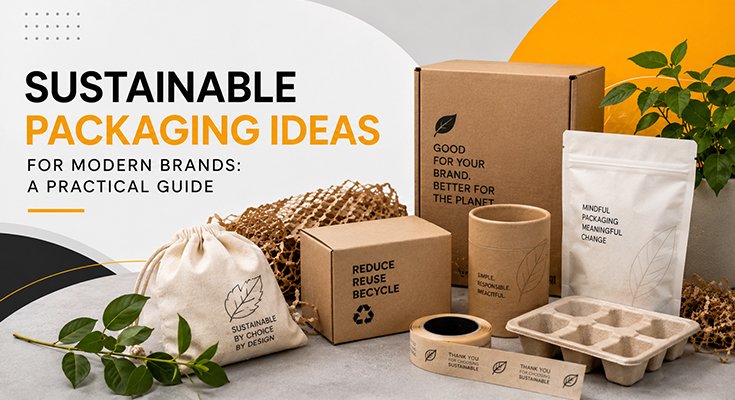
Packaging is no longer only about protecting a product. For modern brands, it can influence customer perception, product presentation, logistics, material usage, and environmental impact.
As sustainability becomes more important to businesses and customers, brands are looking for packaging solutions that reduce unnecessary material use without compromising product protection or visual appeal. Current packaging trends are moving toward recyclable formats, lightweighting, mono-material designs, reusable systems, and better documentation of sustainability claims.
However, sustainable packaging is not simply about replacing plastic with paper or adding an eco-friendly message to a box. The right solution depends on the product, distribution process, packaging requirements, end-of-life options, and the actual environmental benefits of the chosen material.
Here are practical sustainable packaging ideas that modern brands can consider.
What Is Sustainable Packaging?
Sustainable packaging aims to reduce environmental impact while continuing to perform its essential functions.
A well-designed packaging solution should consider factors such as:
- Material consumption
- Product protection
- Recyclability
- Reusability
- Transportation efficiency
- Manufacturing requirements
- End of life recovery
The most suitable solution is therefore not always the material that looks the most environmentally friendly. Sustainability needs to be evaluated alongside functionality and the complete packaging lifecycle.
1. Reduce Unnecessary Packaging
One of the simplest ways to make packaging more sustainable is to use less material.
Brands can review whether every layer, insert, wrapper, sleeve, or protective component is necessary. Reducing excess packaging can lower material consumption while potentially reducing transportation weight and storage requirements.
This approach is often called lightweighting or right-sizing.
However, reducing material should never compromise product protection. Damaged products can create additional waste and environmental costs, making the balance between material reduction and performance important.
2. Choose Recyclable Packaging Formats
Recyclability is becoming an increasingly important consideration in packaging design.
Brands can explore packaging formats that are compatible with established recycling systems in their target markets.
This may include suitable paper-based formats, recyclable plastics, and other materials designed with recovery in mind.
The important point is to avoid treating the word “recyclable” as a universal claim. Recycling availability varies by region, collection infrastructure, material combination, and packaging design. The Sustainable Packaging Coalition highlights the growing importance of consistent definitions and better data around recyclability.
3. Explore Mono Material Packaging
Mono material packaging uses predominantly one material family rather than combining multiple difficult-to-separate materials.
This approach can simplify recovery and recycling when the selected material and format are compatible with local recycling infrastructure.
Mono material solutions are gaining attention because brands are looking for packaging that can combine product protection with improved recyclability.
For brands considering this option, packaging performance should still be tested for barrier requirements, sealing, durability, shelf life, and production compatibility.
4. Consider Paper-Based Packaging Where Appropriate
Paper and fiber-based packaging can be attractive options for brands looking to reduce reliance on certain plastic formats.
They can work particularly well for cartons, boxes, sleeves, inserts, bags, and selected protective applications.
But paper is not automatically sustainable in every situation. Coatings, adhesives, inks, sourcing, moisture resistance, and recycling infrastructure can influence its overall environmental performance. Recent reporting has highlighted these trade-offs as brands increasingly explore paper-based alternatives.
The right question is not simply “Can we replace plastic with paper?” It is “Which material provides the best balance of sustainability and performance for this product?”
5. Design Packaging for Reuse
Reusable packaging can help extend the useful life of packaging instead of treating it as a single-use item.
Examples include:
- Refillable containers
- Reusable shipping boxes
- Returnable transport packaging
- Reusable product containers
This approach can work particularly well when a brand has a suitable collection, refill, or return system.
Reuse becomes more effective when the packaging is durable, convenient, and supported by a practical process for customers.
6. Use Packaging Design to Reduce Material Waste
Sustainability can also be improved through better packaging design.
Brands can optimize dimensions, eliminate unnecessary space, reduce excessive inserts, and select packaging that fits products more efficiently.
Better design can improve material utilization while also making transportation and storage more efficient.
This is particularly relevant for ecommerce businesses where packaging dimensions can influence shipping requirements and protection during delivery.
7. Consider Sustainable Flexible Packaging
Flexible packaging can provide useful opportunities for material efficiency because it can be designed to use relatively low material quantities while providing product protection and functionality.
Applications include food, beverages, personal care, pharmaceuticals, consumer goods, and other products.
However, flexible packaging can involve multiple layers, coatings, and components, so recyclability depends heavily on the specific structure and available recovery systems.
Brands should therefore evaluate the complete packaging construction rather than assuming that a flexible format is automatically sustainable.
8. Make Sustainability Claims Clear and Honest
A sustainable packaging strategy also depends on communication.
Brands should avoid vague claims such as “100% eco-friendly” unless they can clearly support them.
Instead, communicate specific information about:
- Material composition
- Recycled content
- Recyclability
- Reuse instructions
- Disposal guidance
- Relevant certifications
Clear communication helps customers understand what makes the packaging more responsible and reduces the risk of misleading sustainability claims. Transparency is becoming increasingly important as packaging regulations and consumer expectations evolve.
How to Choose the Right Sustainable Packaging
There is no single sustainable packaging solution that works for every brand.
Before changing packaging, businesses should consider:
- Product requirements: Does the packaging provide adequate protection?
- Material efficiency: Can material use be reduced without affecting performance?
- Recovery: Can customers realistically reuse or recycle the packaging?
- Supply chain: Can the packaging work with existing manufacturing and distribution systems?
- Brand experience: Does the packaging still communicate the desired quality and positioning?
- Evidence: Can sustainability claims be supported with reliable information?
This approach helps brands avoid making sustainability decisions based only on appearance or marketing trends.
Common Sustainable Packaging Mistakes
Businesses should avoid:
- Choosing materials without evaluating performance
- Assuming paper is always more sustainable
- Making unsupported environmental claims
- Ignoring local recycling infrastructure
- Using excessive packaging with an eco-friendly appearance
- Reducing material to the point that products become damaged
- Treating sustainability as a marketing campaign instead of a design strategy
Sustainable packaging should be practical, measurable, and appropriate for the product.
Sustainable Packaging Checklist
Before finalizing a new packaging design, ask:
- Can we reduce unnecessary material?
- Is the packaging suitable for its intended use?
- Can it be reused or recovered effectively?
- Have we considered the complete packaging structure?
- Are sustainability claims supported?
- Does the packaging protect the product during transportation?
- Does the design maintain strong shelf appeal?
- Can the packaging work with existing production processes?
Frequently Asked Questions About Sustainable Packaging
1. What is sustainable packaging?
Sustainable packaging is packaging designed to reduce environmental impact while still protecting the product. It considers factors such as material usage, recyclability, reusability, transportation efficiency, production requirements, and end of life recovery.
2. Is paper packaging always more sustainable than plastic?
No. Paper is not automatically more sustainable. Its environmental impact can depend on coatings, adhesives, sourcing, manufacturing, moisture resistance, and local recycling infrastructure. The right choice depends on the product and its complete packaging lifecycle.
3. How can brands reduce packaging waste?
Brands can reduce packaging waste by eliminating unnecessary layers, optimizing package dimensions, reducing excess material, using efficient packaging structures, and selecting formats that support recycling or reuse where practical.
4. What is mono material packaging?
Mono material packaging primarily uses one material family, which can make the packaging easier to sort and recover in suitable recycling systems. However, brands should still evaluate its performance, barrier properties, durability, and compatibility with local recycling infrastructure.
5. How should brands communicate sustainable packaging claims?
Brands should use clear and evidence based claims. Instead of vague statements such as “eco friendly,” they should communicate specific information such as material composition, recycled content, recyclability, reuse instructions, or relevant certifications when supported.
Why Choose Kaizen 360 Branding Pvt. Ltd.?
At Kaizen 360 Branding Pvt. Ltd., we understand that packaging is both a functional product requirement and an important part of brand identity.
Our Packaging Design approach considers visual communication, product presentation, usability, and brand consistency while helping businesses explore packaging concepts suited to their products and markets.
We also provide:
• Branding and Visual Identity
• Packaging Design
• Corporate Branding
• Website Design and Development
• Content Marketing
• Digital Marketing
• SEO
• Creative Design
The goal is to help brands create packaging that looks distinctive, communicates clearly, and supports a practical product experience.
Conclusion
Sustainable packaging is becoming an important consideration for modern brands, but there is no universal material or design that automatically makes packaging sustainable.
The strongest approach is to reduce unnecessary material, evaluate recyclable and reusable formats, explore suitable mono material or fiber based options, improve packaging efficiency, and communicate environmental claims honestly.
Most importantly, sustainability should work alongside product protection, manufacturing requirements, logistics, and brand experience.
For modern businesses, sustainable packaging is not simply about looking environmentally responsible. It is about making smarter packaging decisions that balance performance, design, customer expectations, and environmental responsibility.
At Kaizen 360 Branding Pvt. Ltd., we help businesses create impactful digital strategies through branding, SEO, ASO, PPC, web design and development, graphic design, logo design, social media marketing, content writing and marketing, and corporate videos.
Want to build a purpose driven brand that stands out in any situation? Let us help you create a strategy that delivers real value and long term growth.