Is Your Website Crisis Ready: A Complete Web Design and Development Framework
Mar 30, 2026 — Web Design & Development
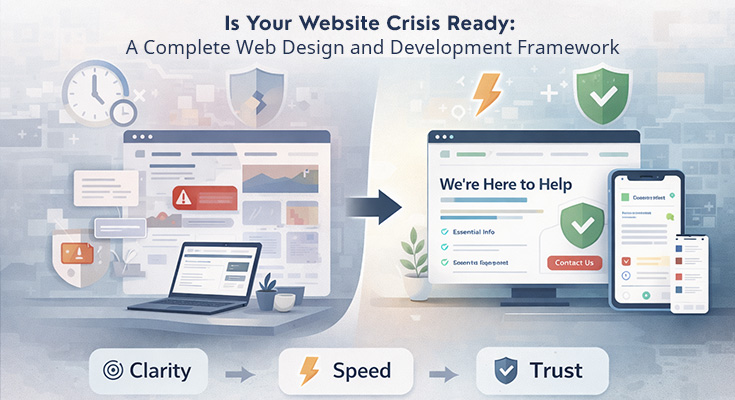
Introduction
In today’s digital landscape, a website is more than just an online presence. It is the foundation of your brand’s communication, credibility, and customer experience.
However, during times of global uncertainty and conflict, user expectations from websites change significantly. Visitors seek clarity, speed, trust, and relevant information rather than complex designs or aggressive sales messaging.
For businesses investing in web design and development, adapting to these changes is essential to maintain engagement and conversions.
As a leading advertising and branding agency in Pune, Kaizen 360 Branding Pvt. Ltd. helps businesses create websites that are not only visually appealing but also resilient, adaptive, and performance driven.
This blog presents a complete framework to help you build a crisis ready website.
Understanding User Behavior During Crisis
When global conditions become uncertain, user behavior shifts toward urgency and information seeking.
Key changes
- Users look for quick and clear information
- Attention span decreases
- Trust becomes a deciding factor
- Mobile usage increases
This directly impacts how websites should be designed and developed.
Why Your Website Needs to Be Crisis Ready
A website that performs well in normal conditions may fail during crisis situations if it is not optimized for changing user expectations.
Common challenges
- Slow loading speed
- Complex navigation
- Outdated or irrelevant content
- Lack of trust signals
These issues can lead to higher bounce rates and lower conversions.
The Crisis Ready Web Design and Development Framework
1. Clarity Focused User Experience
During uncertain times, users prefer simplicity over complexity.
What to implement
- Clear navigation structure
- Easy access to important information
- Minimal distractions
A well structured user experience improves engagement and supports better SEO performance.
2. High Performance and Speed Optimization
Website speed becomes critical as users expect instant access to information.
Key improvements
- Optimize images and code
- Use fast hosting solutions
- Reduce unnecessary scripts
Fast websites enhance user experience and improve rankings in search engines.
3. Mobile First Design Approach
Most users access websites through mobile devices during real time situations.
Best practices
- Responsive design
- Mobile friendly layouts
- Touch optimized elements
Investing in mobile first web design and development ensures better reach and usability.
4. Trust Building Elements
Trust plays a major role in decision making during crisis periods.
Essential trust signals
- Client testimonials
- Secure website certification
- Transparent company information
- Clear contact details
Strong branding combined with trust signals improves credibility and conversions.
5. Real Time Content Flexibility
Websites should be able to adapt quickly to changing situations.
What to include
- Dynamic banners for announcements
- Easy content update system
- Flexible content management
This allows businesses to communicate important updates effectively.
6. Integration with SEO and Digital Marketing
Web design and development should align with SEO and digital marketing strategies.
Benefits
- Improved search visibility
- Better user engagement
- Consistent brand messaging
Combining web development with SEO, PPC, and content marketing creates a strong digital presence.
7. Minimal and Functional Design
During crisis periods, users prefer clean and functional designs over heavy visuals.
Focus areas
- Simple layouts
- Readable typography
- Balanced use of visuals
This enhances usability and keeps users focused on important information.
8. Enhanced Website Security
Global conflicts often lead to increased cyber threats.
Security measures
- Secure hosting environment
- Regular updates and backups
- Data protection practices
A secure website builds trust and protects both users and businesses.
9. Accessibility and Inclusive Design
Websites should be accessible to a wide range of users.
Key aspects
- Easy readability
- Simple navigation
- Inclusive design elements
Accessibility improves user experience and expands audience reach.
10. Data Driven Optimization
Continuous improvement is essential for maintaining performance.
Metrics to track
- Bounce rate
- Page load time
- User engagement
- Conversion rate
Data driven insights help refine web design and development strategies.
Long Term Benefits of a Crisis Ready Website
Building a crisis ready website is not just about short term adaptation it delivers long term advantages.
Benefits
- Improved user trust
- Higher engagement rates
- Better SEO performance
- Stronger brand positioning
Businesses that invest in resilient web design and development gain a competitive edge.
Conclusion
Global uncertainty changes how users interact with digital platforms. Websites must evolve to meet new expectations of speed, clarity, trust, and relevance.
A crisis ready website ensures that businesses remain accessible, credible, and effective even during challenging times.
By aligning web design and development with user behavior, SEO, and branding strategies, businesses can create a strong and future ready digital presence.
At Kaizen 360 Branding Pvt. Ltd., we help businesses create impactful digital strategies through branding, SEO, ASO, PPC, web design and development, graphic design, logo design, social media marketing, content writing and marketing, and corporate videos.
Want to build a purpose driven brand that stands out in any situation? Let us help you create a strategy that delivers real value and long term growth.