How Website Architecture Influences SEO, User Experience, and AI Search
Jul 27, 2026 — Web Design & Development
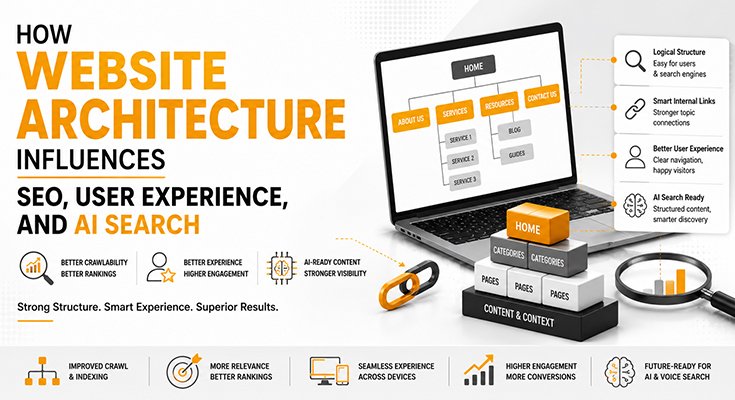
A successful website is built on more than attractive visuals and engaging content. Behind every high-performing website is a well-planned architecture that determines how information is organized, how visitors navigate pages, and how search technologies interpret content.
As search engines become more sophisticated and AI-powered search experiences continue to evolve, website architecture has become one of the most important foundations of long-term digital success. Businesses that invest in a structured website not only improve user experience but also strengthen their opportunities for better search visibility.
What Is Website Architecture?
Website architecture refers to the way webpages are organized, connected, and presented within a website.
It defines how users move from one page to another while helping search engines understand the relationship between different sections of the site.
A strong website architecture typically includes:
- Logical navigation
- Clear page hierarchy
- Organized content categories
- Effective internal linking
- Consistent URL structure
These elements work together to create a website that is easy to explore and understand.
Why Website Architecture Matters for SEO
Search engines rely on website structure to discover, crawl, and understand content.
When webpages are connected through a logical hierarchy, search engines can interpret relationships between topics more efficiently.
Well-structured website development supports SEO by helping search engines:
- Discover important pages
- Understand content relevance
- Follow internal links efficiently
- Recognize topic relationships
- Improve crawl efficiency
Without a clear structure, valuable pages may receive less visibility during the crawling process.
How Internal Linking Strengthens Website Structure
Internal links do much more than connect webpages.
They help establish relationships between topics while guiding visitors toward additional information that may be relevant to their interests.
For example, a website discussing Search Engine Optimization can naturally connect related content about Generative Engine Optimization (GEO), Answer Engine Optimization (AEO), and website design and development.
This creates a stronger content ecosystem that benefits both users and search technologies.
Why User Experience Depends on Website Organization
Visitors expect websites to provide information quickly and without confusion.
When navigation is complicated or important pages are difficult to find, users often leave before completing meaningful actions.
Well-planned web design and development improves user experience by providing:
- Clear navigation menus
- Logical page layouts
- Organized service categories
- Easy access to important information
- Consistent navigation across devices
A structured experience helps visitors move confidently throughout the website.
How Website Architecture Supports AI Search
Modern AI-powered search systems analyze websites differently than traditional search engines alone.
Instead of evaluating individual pages in isolation, AI systems increasingly consider how information is connected across an entire website.
Businesses that organize content into related topics, maintain descriptive headings, and connect relevant pages through meaningful internal links create stronger context for AI-driven search experiences.
This structured approach also supports emerging search methods where users expect direct, accurate, and well-organized answers.
Common Website Architecture Mistakes
Many businesses unintentionally limit website performance through poor structural decisions.
Some common issues include:
- Disorganized navigation
- Orphan pages with no internal links
- Duplicate or inconsistent page structures
- Overly complex navigation menus
- Weak content hierarchy
- Broken internal links
These issues can affect both user experience and search visibility.
Best Practices for Building a Strong Website Structure
Businesses should regularly evaluate whether their website is easy to navigate for both users and search technologies.
Some recommended practices include:
- Create a logical page hierarchy.
- Keep navigation simple and consistent.
- Use descriptive page URLs.
- Connect related content through internal links.
- Group similar services and topics together.
- Review website structure as new content is published.
Small improvements made consistently often contribute to stronger long-term website performance.
Why Website Architecture Supports Business Growth
A well-organized website does more than improve SEO.
It creates a better experience for visitors, encourages users to explore additional pages, and makes valuable information easier to find.
As websites continue expanding with new services, blogs, and resources, a scalable architecture becomes increasingly important for maintaining both usability and search performance.
Businesses that invest in strategic website design and development create digital foundations that can support future growth without sacrificing organization or user experience.
Conclusion
Website architecture is one of the most overlooked elements of digital success. While design captures attention, structure determines how effectively visitors and search technologies interact with a website.
Businesses that prioritize logical navigation, organized content, and meaningful internal linking create stronger experiences for users while improving their ability to compete in traditional search engines and AI-powered search environments.
At Kaizen 360 Branding Pvt. Ltd., we build strategic website design and development solutions that combine user-focused experiences, SEO best practices, and scalable website architecture to help businesses strengthen their digital presence and support long-term growth.
Frequently Asked Questions (FAQs)
What is website architecture?
Website architecture is the structure and organization of webpages within a website, helping users navigate information while allowing search technologies to understand page relationships.
Why is website architecture important for SEO?
A well-organized website helps search engines discover content more efficiently, understand topic relationships, and improve crawl effectiveness.
How do internal links improve website architecture?
Internal links connect related pages, improve navigation, distribute authority across a website, and help visitors discover additional relevant content.
Can website architecture improve user experience?
Yes. Clear navigation, logical page organization, and consistent layouts make websites easier to explore and help users find information more quickly.
Does website architecture influence AI-powered search?
Yes. Organized content, descriptive headings, and meaningful internal linking help AI systems better understand how information is connected across a website.
At Kaizen 360 Branding Pvt. Ltd., we help businesses create impactful digital strategies through branding, SEO, ASO, PPC, web design and development, graphic design, logo design, social media marketing, content writing and marketing, and corporate videos.
Want to build a purpose driven brand that stands out in any situation? Let us help you create a strategy that delivers real value and long term growth.