How Strategic Seasonal Content Drives Engagement and Conversions
May 13, 2026 — Content Marketing
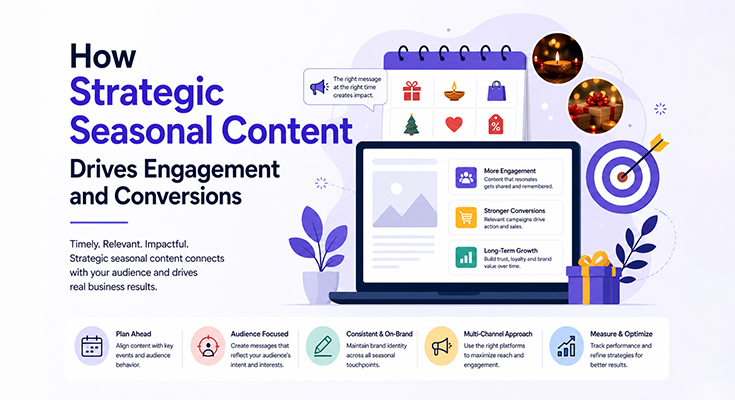
Seasonal marketing has become a major part of modern digital strategy. From holiday campaigns and festive promotions to industry events and cultural moments, brands constantly create seasonal content to capture attention and increase engagement.
However, visibility alone does not guarantee results. Many seasonal campaigns generate impressions and likes but fail to create meaningful business impact. The difference often lies in strategy.
Businesses that approach seasonal content strategically are able to improve engagement, strengthen brand relevance, and drive conversions more effectively.
Why Seasonal Content Matters in Modern Marketing
Consumer behavior changes throughout the year. Holidays, festivals, shopping periods, and cultural events influence how people interact with brands and make purchasing decisions.
Seasonal content helps businesses:
- Stay relevant during high-attention periods
- Align messaging with customer interests
- Increase audience engagement
- Create timely marketing opportunities
When planned correctly, seasonal campaigns can strengthen both short-term performance and long-term brand visibility.
The Problem with Generic Seasonal Campaigns
Many businesses create seasonal content only because competitors are doing the same. As a result, campaigns often become repetitive, overly promotional, and disconnected from audience intent.
Common issues include:
- Generic messaging
- Lack of audience relevance
- Overuse of discounts without strategy
- Inconsistent branding
- Short-term engagement with no conversion focus
Without a structured approach, seasonal marketing becomes noise rather than value.
What Makes Seasonal Content Strategic
Strategic seasonal content is built around audience behavior, timing, and business objectives rather than trends alone.
A strong seasonal content strategy focuses on:
- Understanding audience intent
- Aligning campaigns with brand positioning
- Creating relevant and useful messaging
- Maintaining consistency across platforms
This approach helps businesses move beyond temporary engagement and create meaningful customer interaction.
How Seasonal Content Improves Engagement
Seasonal campaigns naturally attract attention because they connect with what audiences are already thinking about or experiencing.
Effective seasonal content:
- Feels timely and relevant
- Encourages interaction and sharing
- Creates emotional connection
- Increases brand recall during important periods
This is why brands investing in content marketing and social media strategy often use seasonal campaigns to strengthen audience relationships.
The Connection Between Seasonal Content and Conversions
Engagement alone is not enough. Strategic seasonal marketing also supports conversion-focused goals.
Well-planned campaigns help businesses:
- Guide users toward specific actions
- Promote relevant products or services
- Increase website traffic and inquiries
- Improve campaign performance during peak periods
When messaging, visuals, and user experience are aligned, seasonal campaigns become significantly more effective at driving results.
Why Branding Matters in Seasonal Campaigns
Seasonal marketing should adapt to trends without losing brand identity.
Strong branding ensures:
- Consistent visual communication
- Clear messaging across channels
- Better audience recognition and trust
Businesses that combine seasonal content with strategic branding create campaigns that feel both timely and authentic.
The Role of Content Planning and Timing
Timing is one of the most important factors in seasonal marketing success.
Launching campaigns too late often reduces visibility and engagement. Strategic planning allows businesses to:
- Prepare campaigns in advance
- Align content with audience behavior
- Optimize distribution across channels
- Maintain consistency throughout the campaign period
A structured content calendar improves execution and marketing efficiency.
How Different Platforms Support Seasonal Campaigns
Seasonal content performs differently across platforms.
For example:
- Social media increases reach and engagement
- Websites support conversions and lead generation
- Email marketing improves retention and follow-up
- Paid campaigns accelerate visibility during peak periods
The most effective strategies integrate multiple channels into one coordinated campaign.
Common Mistakes Businesses Make
Many businesses fail to achieve results from seasonal campaigns because they:
- Focus only on promotions
- Ignore audience behavior
- Use inconsistent messaging
- Create content without clear objectives
- Prioritize trends over strategy
Addressing these gaps helps businesses create campaigns that deliver stronger engagement and measurable outcomes.
The Long-Term Value of Strategic Seasonal Content
Seasonal campaigns should not only generate short-term spikes in traffic. When executed strategically, they also contribute to long-term brand growth.
Benefits include:
- Improved audience trust
- Stronger brand visibility
- Better customer engagement
- Increased marketing effectiveness over time
This makes seasonal content an important part of broader digital marketing and content strategies.
Conclusion
Seasonal marketing is most effective when it is driven by strategy rather than trends alone. Businesses that understand audience behavior, maintain consistent branding, and align campaigns with clear goals are more likely to achieve meaningful engagement and conversions.
Strategic seasonal content helps brands stay relevant, strengthen customer relationships, and improve marketing performance across digital channels.
At Kaizen 360 Branding Pvt. Ltd., we create strategic content and marketing campaigns that combine branding, storytelling, and digital execution to help businesses drive stronger engagement and conversion-focused results throughout every season.
Frequently Asked Questions (FAQs)
Why is seasonal content important for businesses?
Seasonal content helps businesses stay relevant, engage audiences during high-attention periods, and create timely marketing opportunities.
How does seasonal content improve conversions?
Strategic seasonal campaigns guide users toward action through relevant messaging, targeted offers, and stronger audience engagement.
What platforms work best for seasonal campaigns?
Social media, websites, email marketing, and paid advertising all contribute to successful seasonal marketing strategies.
Why do many seasonal campaigns fail?
Many campaigns fail because they focus only on trends or promotions without clear strategy, audience understanding, or branding consistency.
How early should businesses plan seasonal campaigns?
Planning campaigns in advance improves content quality, distribution, consistency, and overall campaign performance.
At Kaizen 360 Branding Pvt. Ltd., we help businesses create impactful digital strategies through branding, SEO, ASO, PPC, web design and development, graphic design, logo design, social media marketing, content writing and marketing, and corporate videos.
Want to build a purpose driven brand that stands out in any situation? Let us help you create a strategy that delivers real value and long term growth.