How Design-Driven Content Improves Brand Consistency Across Platforms
Oct 30, 2025 — Branding, Content Marketing
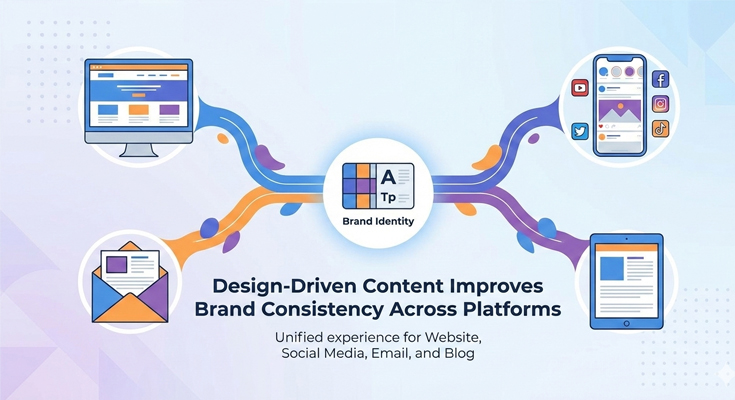
In today’s digital landscape, content is consumed across multiple platforms at the same time. Websites, social media channels, email campaigns, blogs, and digital advertisements all shape how a brand is perceived. While written content plays an important role, it is design-driven content that ensures consistency, recognition, and trust across every digital touchpoint.
For businesses investing in structured content creation and content marketing, design is no longer an optional layer. It is a core element that connects messaging, visuals, and brand identity into a unified experience.
Understanding Design-Driven Content
Design-driven content refers to content that is planned and created with a strong visual and structural framework in mind. It combines written messaging with consistent visual elements such as color palettes, typography, layout systems, imagery, and formatting styles.
This approach ensures that content does not feel disconnected when published across different platforms. Instead, every piece of content reinforces the same brand identity, regardless of where the audience encounters it.
1. Visual Consistency Builds Instant Brand Recognition
Consistent design allows audiences to recognize a brand instantly, often before reading the content itself. Repeated exposure to the same visual language builds familiarity and trust over time.
Key elements of visual consistency include:
- Uniform use of brand colors across platforms
- Consistent typography and font hierarchy
- Standardized layout patterns for posts, pages, and creatives
- Aligned imagery and graphic styles
Businesses using professional content writing services increasingly pair strong copy with structured design systems to maintain recognition across channels.
2. Aligning Content Tone With Visual Identity
Brand consistency is not limited to visuals alone. The tone of written content must align with the overall design language. A clean, minimal design paired with overly casual messaging can feel mismatched, while strong visuals combined with unclear copy reduce impact.
Design-driven content ensures that:
- Visual tone supports the brand voice
- Messaging remains consistent across formats
- Content feels cohesive regardless of the platform
This alignment is especially important for brands executing multi-channel content marketing strategies.
3. Platform-Specific Design Without Losing Brand Identity
Each digital platform has its own content behavior and format requirements. What works on a website may need adaptation for social media, email marketing, or paid campaigns.
Design-driven content enables brands to:
- Adapt layouts for different platforms
- Adjust dimensions and formats without changing identity
- Maintain visual consistency while optimizing performance
This balance is a key focus for a reliable content marketing company in India, where brands often engage diverse audiences across multiple digital platforms.
4. Improving Content Engagement and Retention
Well-designed content is easier to consume, understand, and remember. Clear visual hierarchy helps guide users through the content, improving readability and engagement.
Design elements that support engagement include:
- Proper spacing and content flow
- Visual cues that highlight key messages
- Balanced use of text and graphics
For businesses using content writing services in Pune, combining thoughtful design with quality copy significantly improves user interaction and content effectiveness.
5. Strengthening Brand Trust Through Consistency
Inconsistent design and messaging can make a brand appear unstructured or unreliable. Design-driven content reinforces professionalism and builds credibility over time.
Brand trust grows when:
- Content looks familiar across platforms
- Messaging remains clear and aligned
- Visual standards are followed consistently
This consistency is a long-term advantage for businesses investing in professional content marketing services to strengthen their online presence.
6. Supporting Scalable Content Creation
As content volume increases, maintaining consistency becomes more challenging. Design-driven systems make it easier to scale content creation without compromising quality or brand alignment.
Structured content systems help businesses:
- Speed up content production
- Reduce inconsistencies across teams
- Maintain brand standards as content grows
This approach supports sustainable growth for businesses working with experienced content marketing companies in Pune and across India.
Conclusion: Design as a Foundation for Consistent Content Marketing
Design-driven content is not just about aesthetics. It is about creating a unified brand experience across every digital platform. When design and content work together, brands achieve stronger recognition, higher engagement, and long-term trust.
For businesses investing in content writing and content marketing, integrating design into the content strategy ensures clarity, consistency, and scalability across all channels.
For brands aiming to maintain visual consistency while scaling content across platforms, aligning design with content strategy plays a critical role in long-term brand recognition and trust. Kaizen 360 Branding Pvt. Ltd. supports businesses in building design-led content systems that remain consistent, adaptable, and brand-focused.