High-Impact Brand-Building Techniques for Hotels and Restaurants
Aug 12, 2025 — Branding
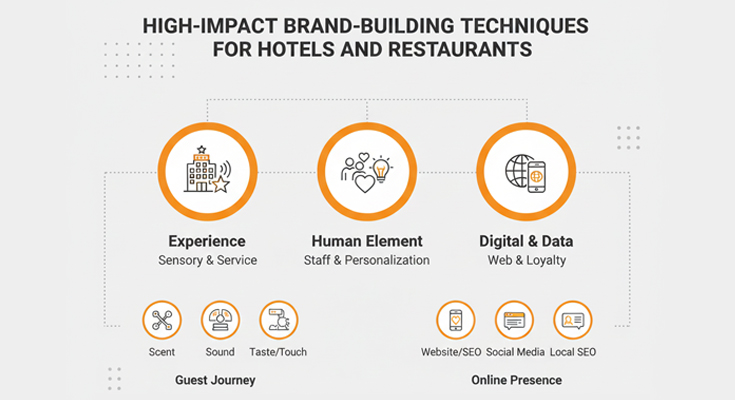
In the hyper-competitive world of hospitality, where countless establishments vie for a traveler’s booking or a diner’s reservation, having a great product, a luxurious hotel room or a delicious meal is merely the price of entry. True, sustained success is built not on transactions, but on brand equity.
A strong brand is the promise you make and the memory you deliver. It is the intangible value that allows a boutique hotel to command a premium over a generic chain or an independent restaurant to inspire fierce loyalty. For hotels and restaurants, brand building is a holistic discipline that must touch every sensory, digital, and human touchpoint. It is the strategic shift from selling a service to selling a singular, unforgettable experience. Many businesses work with a Branding Company in Pune like Kaizen 360 Branding Pvt. Ltd. to strengthen these brand experiences.
Achieving this requires implementing deliberate, multi-faceted brand-building techniques that are consistent, authentic, and memorable. Here is the strategic roadmap for creating a dominant and enduring presence in the modern hospitality market.
I. The Foundation: Architecting a Unique Brand Identity
Before investing in marketing, the brand’s core must be defined. A powerful hospitality brand is rooted in a clear, compelling, and differentiated identity. Strong Branding Agencies in Pune often start with this foundation.
1. Defining the Unique Service Proposition (USP)
What is the single, non-negotiable experience you offer? Your USP must be more profound than “great service.” Is your hotel a sanctuary for the stressed business traveler? Is your restaurant the cultural hub for authentic regional cuisine? This definition is the lens through which every decision, from napkin quality to check-in dialogue, must be filtered. A strong restaurant branding strategy might focus on a specific ethical sourcing story, while a hotel might center its identity on a minimalist, technology-forward aesthetic. This stage also supports brand identity design, brand development, and brand positioning.
2. Crafting the Brand Story
Today’s consumers, especially in the B2B hospitality sector (group bookings, corporate events), buy into purpose and personality. Your hotel brand-building process must weave a genuine narrative: the history of the building, the passion of the founder, or a commitment to sustainability. This story humanizes the business, making it relatable and memorable. This narrative is then translated into the visual identity, the choice of color palette, logo design, and architectural décor, ensuring every physical element reinforces the central theme. These elements are also core services offered by advertising agencies in Pune, India, including Brand Naming and corporate branding.
II. The Core Technique: Curating the Immersive Guest Experience
Unlike almost any other industry, hospitality brands are built in person. The brand is not the brochure; it’s the moment a guest first smells the lobby fragrance or sees a server handle a complaint.
3. Consistency Across Sensory Touchpoints
High-impact branding leverages all five senses. This requires meticulous planning for:
- Aroma: Implementing a signature scent that triggers brand recall (the most powerful memory trigger).
- Sound: Curating a unique playlist for the common areas that aligns with the brand personality (e.g., jazz for a sophisticated lounge, acoustic for a casual cafe).
- Taste and Touch: Ensuring the materials the texture of the linens, the weight of the silverware, the design of the menu all communicate quality and intention.
This guest experience consistency builds confidence and trust.
4. Mastering the “Unscripted Moment.”
The true test of a brand is how it handles the unexpected. Empowering front-line employees to solve problems immediately and creatively transforms a negative situation into a positive brand memory. This goes beyond standard operating procedure. When a staff member recognizes a guest’s preference from a previous stay or surprises a diner with an off-menu item based on a casual conversation, they are actively strengthening the brand’s reputation for personalized service, a key differentiator in hospitality marketing.
III. The Digital Pillar: Extending the Brand Online
In the digital age, your website is the first impression, the front desk, and the reservation system all rolled into one. It must be a seamless extension of the physical brand.
5. Website as the Digital Lobby
A top-tier hospitality website must be functionally impeccable and aesthetically aligned. It requires a mobile-first, rapid-loading design that showcases high-resolution imagery and video. Furthermore, the user experience (UX) must prioritize simple, friction-free booking and menu navigation. If a customer struggles to book a room or find a menu, the brand is perceived as disorganized and unreliable.
6. Social Media for Personality and Engagement
Social media should move beyond simple promotion to become a platform for sharing the brand’s unique personality and story. It is the ideal place to showcase the human side of the operation, behind-the-scenes chef work, employee spotlights, or unique local partnerships. Crucially, social channels are also vital for reputation management, requiring rapid, professional, and personalized responses to both praise and criticism, turning reviews into public proof points of a commitment to excellence.
7. Geo-Targeting and Local SEO
For both hotels and restaurants, geographic visibility is paramount. Local SEO and Geographic Optimization (GEO) techniques are essential for capturing high-intent searches. This includes:
- Maintaining a flawless, detailed Google Business Profile.
- Generating location-specific content (e.g., “The Best Fine Dining Near the Financial District”).
- Securing positive, recent reviews that explicitly mention the city or neighborhood.
IV. The Human Element: Employees as Brand Ambassadors
The most overlooked brand-building technique is internal branding. If your employees do not understand, believe in, or live the brand promise, the entire strategy will fail at the point of customer contact.
8. Culture, Training, and Empowerment
A brand must be trained into the staff. This means onboarding goes beyond technical skills to instill the core brand values. Employees must be empowered to make judgment calls and personalize service without needing manager approval for every small issue. When employees are treated as stakeholders and are clearly aligned with the brand’s purpose, they naturally become enthusiastic brand ambassadors.
9. Utilizing Data for Personalized Loyalty
Moving beyond generic email blasts, modern branding uses CRM data to deliver true personalization. For a hotel, this means understanding a guest’s past amenity choices. For a restaurant, it means remembering dietary restrictions or favorite wines. This data-driven personalization rewards loyalty and strengthens the emotional connection with the brand, making guests feel seen and valued, the ultimate goal of premium hospitality.
In the end, successful brand-building in the hospitality sector is a comprehensive exercise in consistency, authenticity, and execution. It requires a unified approach where the digital presence, physical environment, and human interaction are all singing the same, carefully crafted song.
To build a brand that not only attracts but retains the most desirable guests and patrons, you need a strategy that unifies every touchpoint into a cohesive, lead-generating machine. Explore comprehensive digital marketing, branding services, and website redesign services from Kaizen 360 Branding Pvt. Ltd.
At Kaizen 360 Branding Pvt. Ltd., we help businesses create impactful digital strategies through branding, SEO, ASO, PPC, web design and development, graphic design, logo design, social media marketing, content writing and marketing, and corporate videos.
Want to build a purpose driven brand that stands out in any situation? Let us help you create a strategy that delivers real value and long term growth.